January 29, 2026
by Tom Ewing
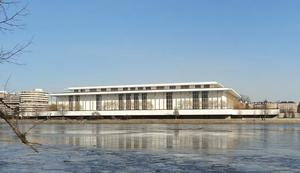
Recent attention to the Kennedy Center has brought visual reminders of the bicycle lane that runs directly in front of the building along the Potomoc River. The Rock Creek Trail provides cyclists, as well as walkers and runners, with a safe route from the south end of Rock Creek Park to the Memorial Bridge / Lincoln Memorial end of the National Mall.
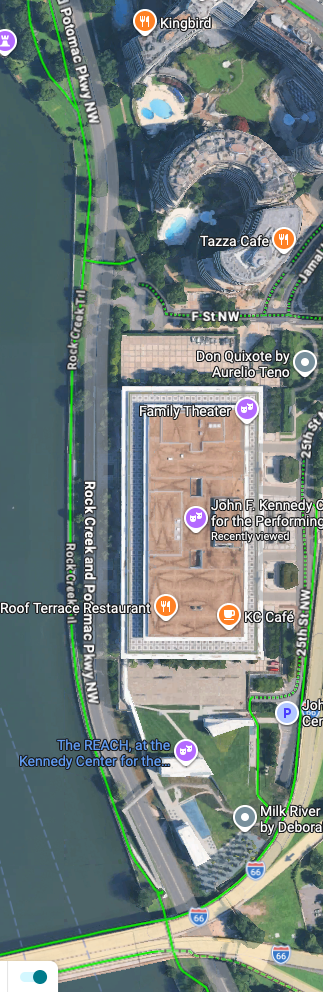
The recent history of this trail extends back to the 1970s, the era of the Bikecentennial, when the National Park Service paved some of the existing bridle paths to encourage cycling through the park. The sections of paved trail were expanded further into the park in the decades that followed, along with improved access and dedicated bridges for walkers, runners, and cyclists. Cycling organizations, local governments, and federal agencies contributed to these efforts, although the former always pushed for more trails, safer routes, and protected spaces.
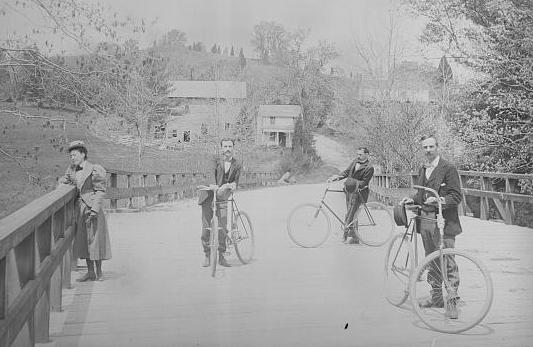
The history of cycling in Rock Creek park actually extends back even further into the early twentieth century. An undated photograph in the Library of Congress shows three riders in Rock Creek Park near Pierce Mills.
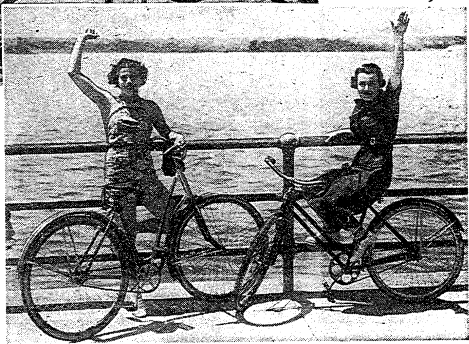
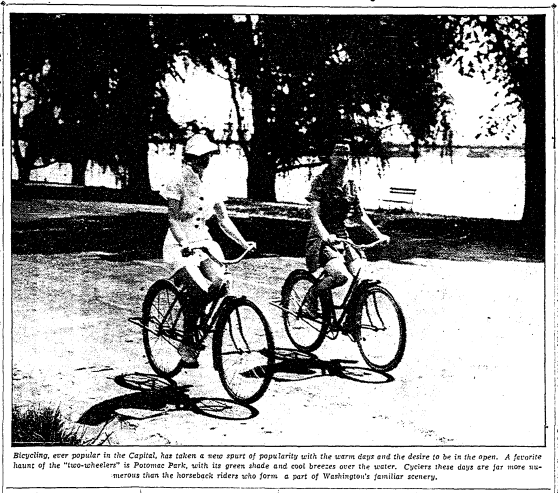
In the 1930s, articles in the Washington Post included Rock Creek among the favorite cycling locations for Washington riders, with several photographs depicting joyous riders on period bicycles.
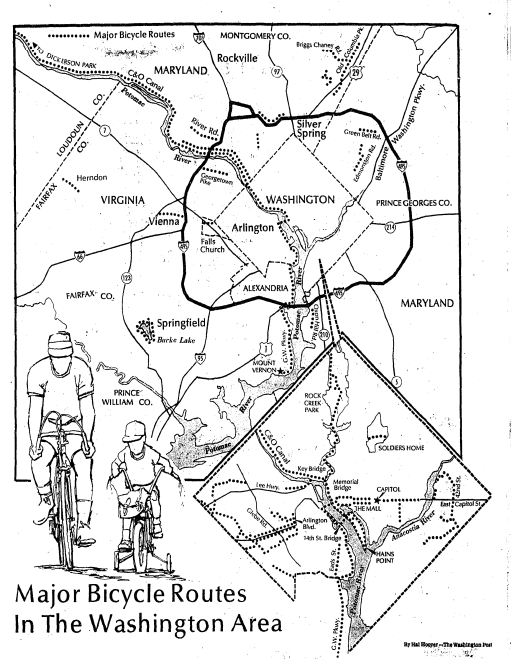
In 1976, a map showing “Major Bicycle Routes in the Washington Era” included a detailed map of the Rock Creek Park Trail, including the section along the river from Memorial Bridge. An accompanying drawing showed an adult on a bicycle and a child with training wheels.
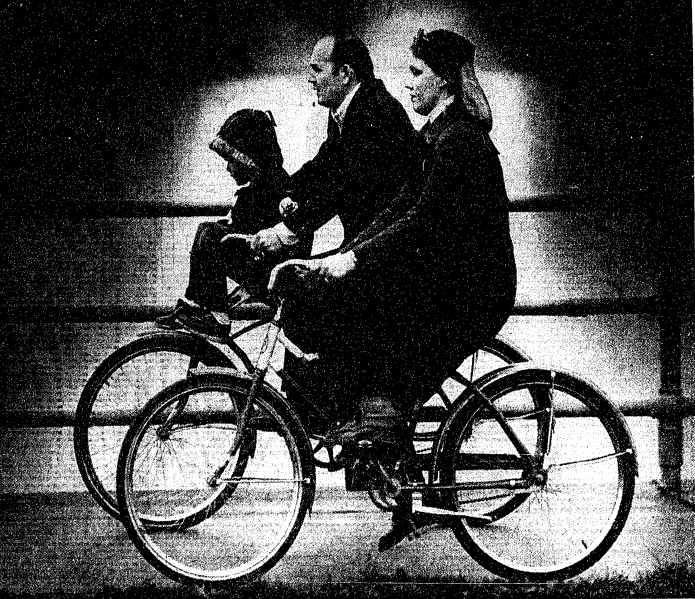
The cover photograph in the Virginia Weekly and the Maryland Weekly depicted two adults on cruising bicycles, with a child perched on the handlebars of one adult bicycle.
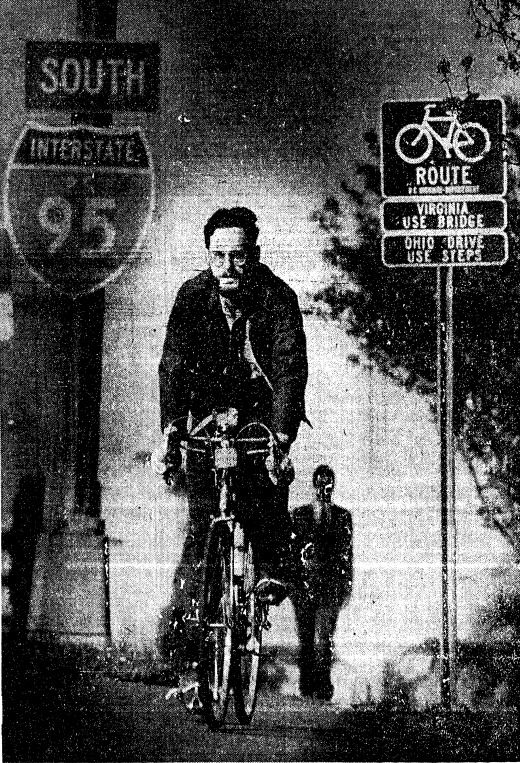
The District Weekly, by contrast, had a photograph of a man on a ten speed riding past highway and bike trail signs. None of the cyclists wore helmets.
Bicycling on the Rock Creek Park Trail in front of the Kennedy Center is not easy or fun (although it has improved over the decades). The access from the Memorial Bridge may involve crossing busy streets prior to reaching the protected trail. Even the Rock Creek Park Trail has some challenging cross streets and narrow side trails. Heavy traffic on roads next to the Trail is a constant source of noise and distraction. Yet even with these complications, the Trail is a fundamental element of the network of trails that enable safe cycling, walking, and running in the nation’s capital. More importantly, the Kennedy Center, like Rock Creek Park, Memorial Bridge, and the National Mall, are public spaces that connect people to their environment and to each other. In 1776, Americans rebelled in part against the capricious abuse of power by a monarch unfettered by legislative constrainrs, judicial authority, or public sentiment. As we look ahead to America’s semiquincentennial, this impulse to reject the exercise of personal power remains intrinsic to the nation’s identity.

Leave a Reply