by Tom Ewing
December 23, 2025
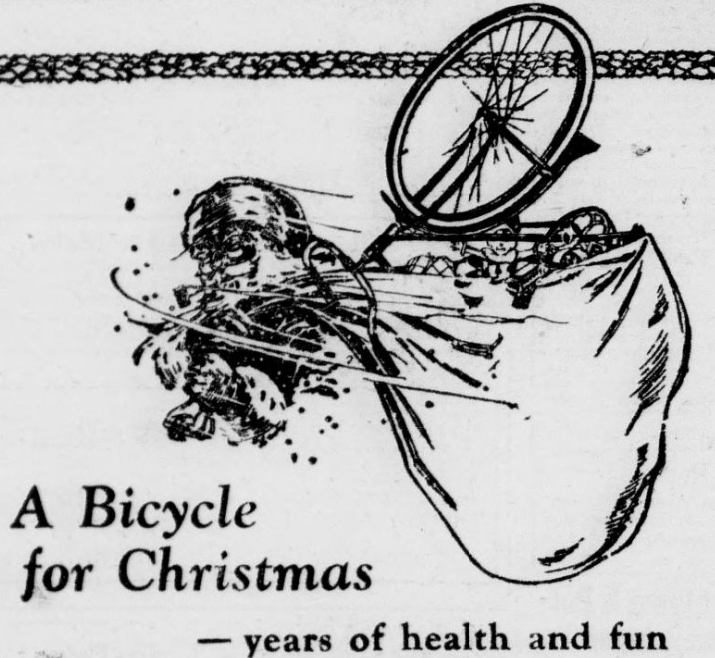
A widely circulated advertisement in December 1925 depicted a bicycle, improbably, carried within Santa’s toy bag. The front wheel and handlebar protrude from the open top, while a windswept Santa tots the full bag. The text published in the Washington Daily News on December 18, 1925 emphasized the benefits of cycling: “A bicycle for Christmas — years of health and fun. There’s nothing in the whole wide world a red-blooded youngster would rather have then a good bicycle. There’s nothing that would keep him so much in the open where he belongs–give him such fine exercise–develop him more, bodily and mentally–playing with other fellows who owne bicycles and reveling in clean, wholesome fun.”
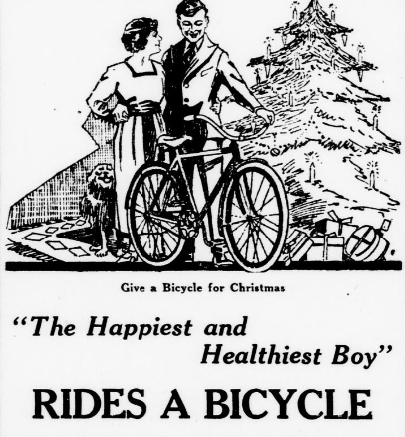
The same themes emerged in an advertisement in the Evening Star (Washington DC) on December 1, 1925, depicting parents holding a bicycle next to a decorated tree, with the tag lines: “Give a bicycle for Christmas. The happiest and healthiest boy rides a bicycle.”
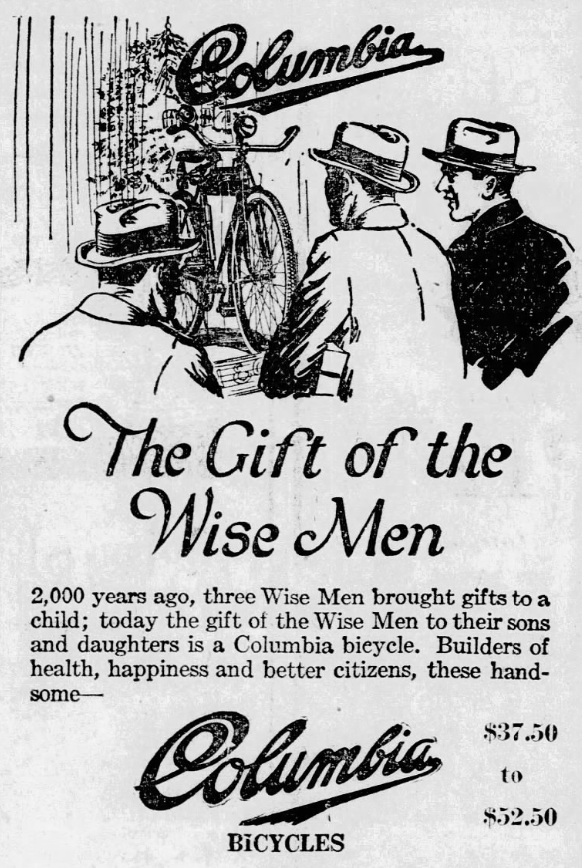
Finally, these themes emerge in a slightly more erudite manner in an advertisement, first located in 1924, and again in subsequent holiday seasons, depicting three well-dressed men looking at a display bicycle. The text, as printed in the Commercial Appeal (Memphis, December 11, 1925) makes a connection across two milennia in order to sell a modern product: “The Gift of the Wise Men. 2,000 years ago, three Wise Men brought gifts to a child; today the gift of these Wise Men to their sons and daughters is a Columbia bicycle. Builders of health, happiness, and better citizens, these handsome — Columbia bicycles.” Across these varied images, the consistent theme in advertising holiday bicycles is the promise of health and happiness.

Leave a Reply