April 23, 2026
by Tom Ewing
The recent spike in gasoline prices beginning the national average to $4 a gallon evokes memories of the energy shocks of the 1970s. Of course, prices were lower fifty years ago. In 1976, the average price for a gallon of gas in the United States was $0.56. Considering that the average price in 1971 was just $0.33, this increase of more than 50% in five years seemed shocking, even if the price is just one-eight of the cost now.
In 1976, as cyclists prepared to celebrate the nation’s 200th birthday, gas prices encouraged many to look to bicycles as a less costly and more efficient means of transportation. The headline in the Daily Progress (Charlottesville, Virginia, June 15, 1976) expresses this sentiment: “Cycling can Cure Gas Pump Tension.” The article began with a statement appropriate for 1976 as well as today, although with an adjustment in scale: “When one drives up to a gasoline pump and the price reads 60 cents a gallon, one is no longer surprised…angry, maybe, but surprised, no.” The article included this observation from a doctor about riding a bicycle: “I feel about twice as good when I do it. Bicycle riding is quiet; it saves on gas; it’s environmentally better than driving a car…and I enjoy it.”
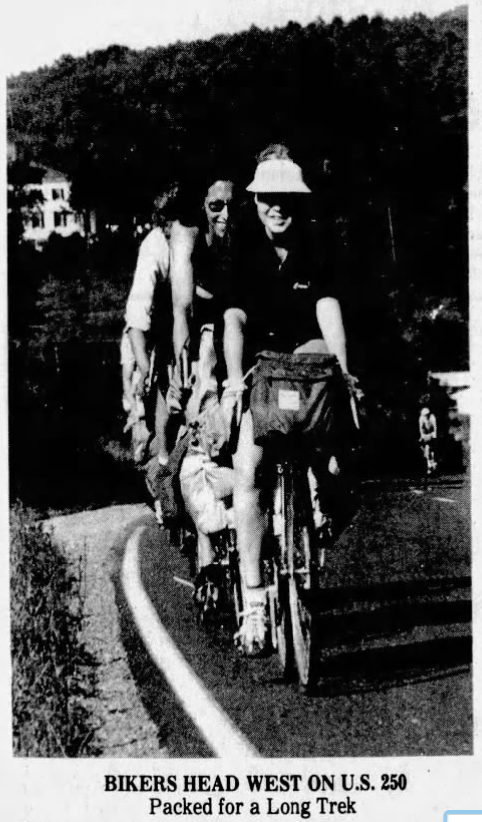
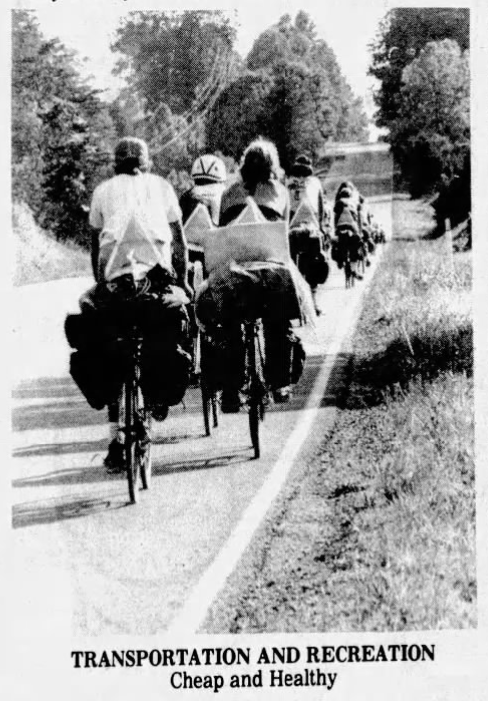
The article described several favorite rides from Charottesville of varying distances and with a range of difficulties, including overnight trips into the mountains and across Virginia. Although this article did not mention the Bikecentennial, which had already brought cyclists through Charlottesville on their westbound trip, two photographs of heavily laden cycling groups could easily have been riding across the country or across Virginia on an organized trip.
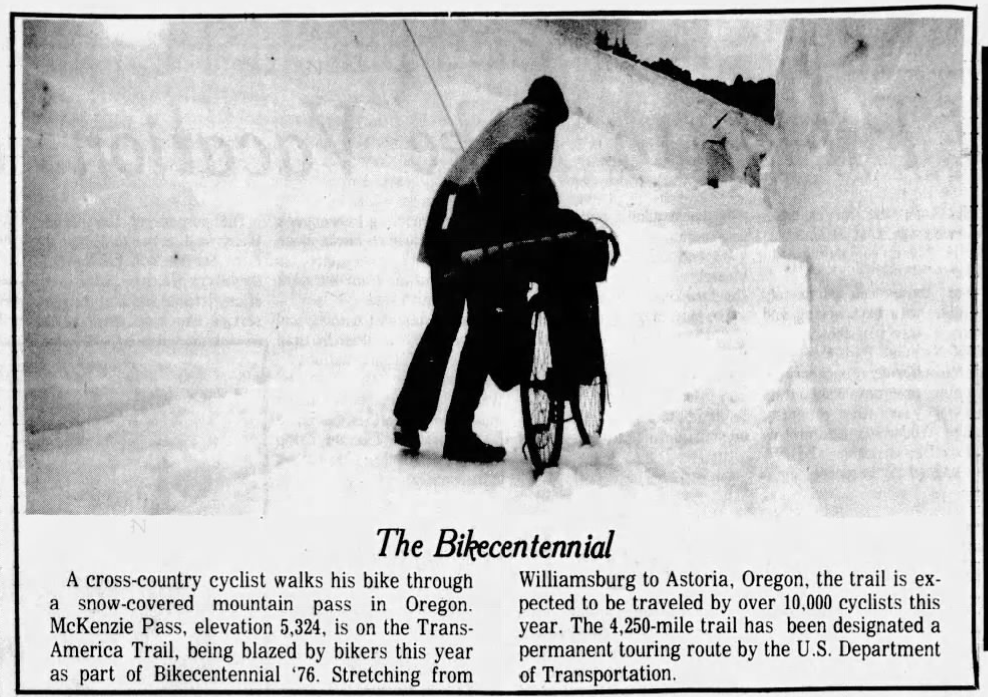
The Bikecentennial was the subject of a photograph and caption published next to this article about local cyclists. In the photograph, a cyclist pushed a bicycle with full gear bags through McKenzie Pass in Oregon, with snow banks well above the head of the cyclist (even above the orange safety flag attached to the bicycle’s seat). The elevation of the pass, 5,324 feet, is more than 1500 feet higher than the highest point in Virginia, near Mount Rogers Recreation Area. The caption included the statement that 10,000 riders were expected on the 4,250 mile trail “designated a permanent touring route by the U.S. Department of Transportation.”

Leave a Reply