May 8, 2025
by Tom Ewing
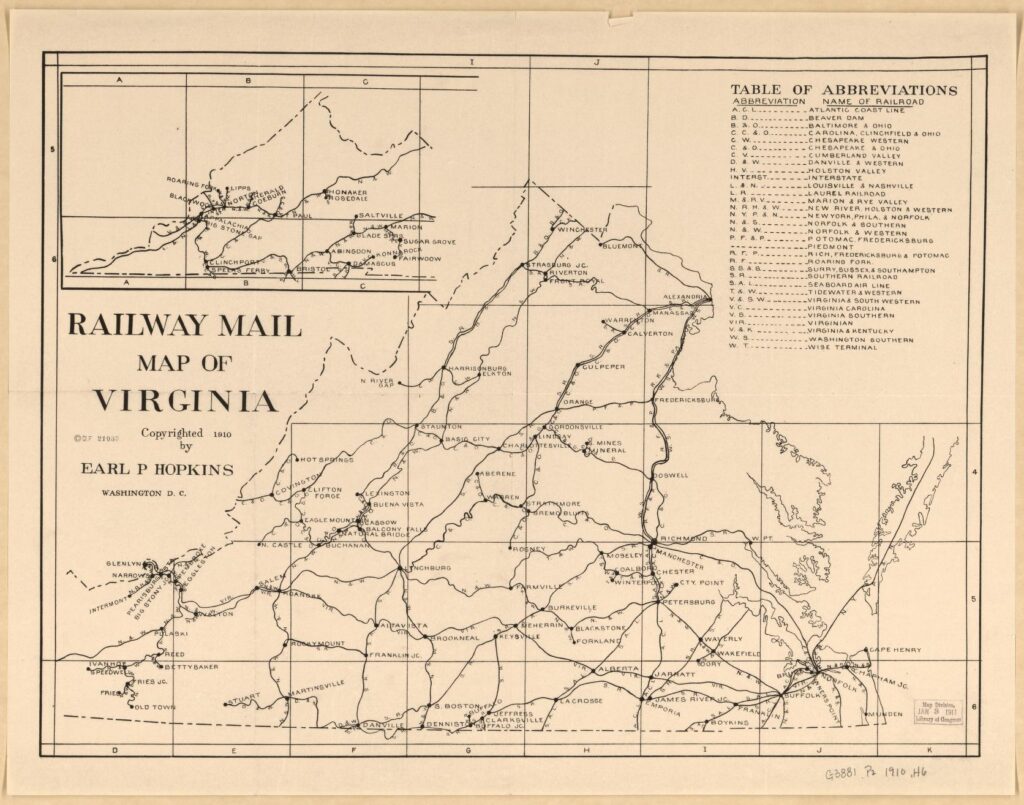
On May 10, 1869, the ceremonial hammering of the golden spike in Utah marked the completion of the transcontinental railway system across the United States. In the decades that followed, rail networks connected people and communities across the country as well as more closely within regions. A map of railway lines in Virginia circa 1910 shows the density and variety of connections within and beyond the state.
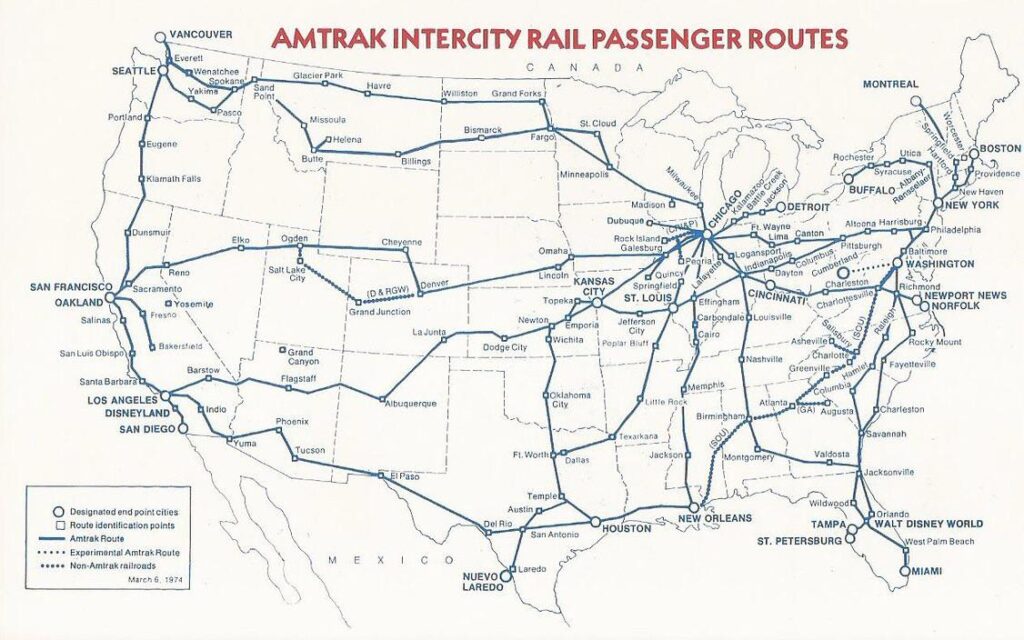
By contrast, Amtrak only served four stations in Virginia throughout the 1970s, as several stations lost passenger service during the decade.
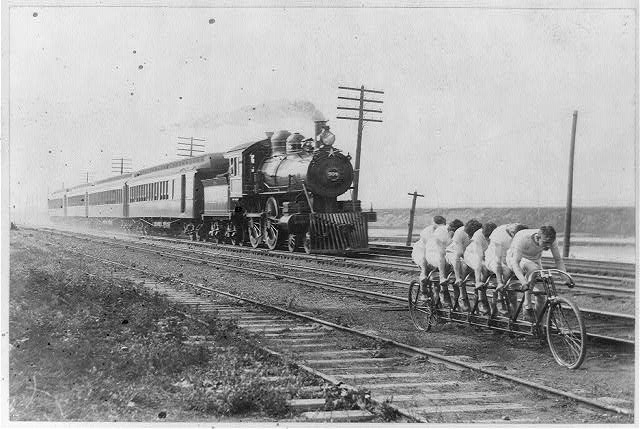
The 1890s marked the growth of public fascination with both railroad travel and bicycling. In 1896, the Stearns Bicycle Company in Syracuse, New York staged a publicity race between the Empire State Express and a team of six riders on a bicycle. After several days of training (and a near disaster when a train unexpectedly appeared on the same track, forcing the cyclists to leap to safety), the race took place in July 1896. The cyclists began riding first, so they were at full speed when the measured half mile race began. The cyclists won by four lengths.
The fifty years since the Bikecentennial have seen a resurgence of train travel in the United States with more passengers, increased service, and plans for new (or renewed) stations. Amtrak now serves more than twenty stations in Virginia along two primary routes.
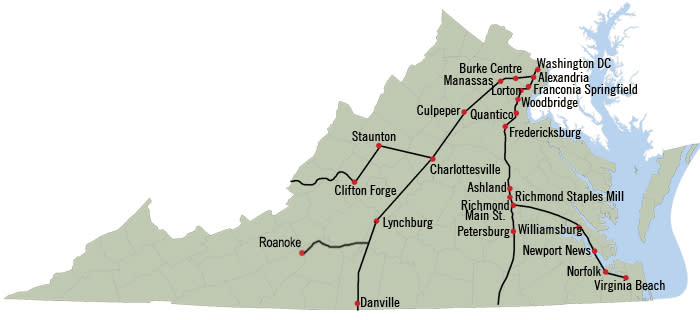
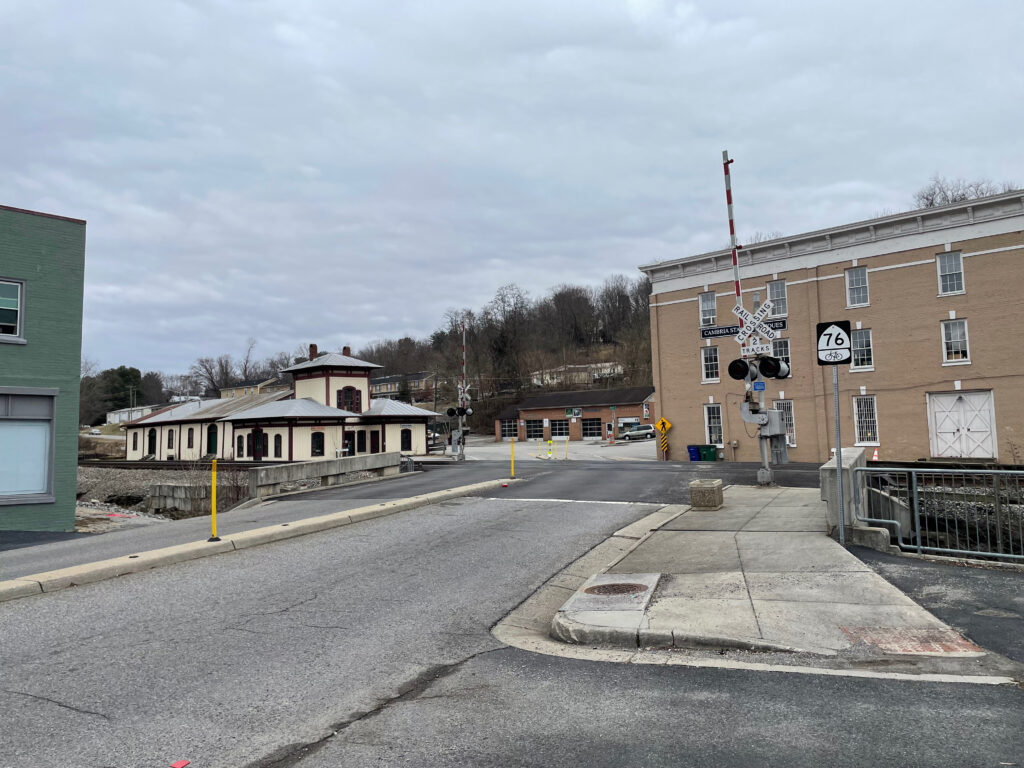
As discussed in the Ashland episode, Route 76 in Virginia intersects with Amtrak service in several locations. Two stations, Ashland and Charlottesville, are directly along Route 76. The Williamsburg station is just a few blocks north of Route 76. The downtown Richmond station is accessible from cycling paths through the city, while the Roanoke station is located along downtown greenways that connect to Route 76 near Troutville. In the next several years, Amtrak will resume service to Christiansburg, thus bringing passengers to the Cambria station directly on Route 76. Cyclists seeking access to Route 76 thus have many opportunities to access points along the itinerary. Cyclists riding along tracks may feel the urge to race the train, like their predecessors more than 120 years ago, but they should do so only while exercising appropriate regard for safety.

Leave a Reply